Can Acupuncture Help You Actually Pass a Kidney Stone?
Beyond managing pain, there is another question patients almost always ask: “Can anything help me actually pass this stone faster — without surgery?” The research here is genuinely encouraging. A review of 13 clinical trials involving over 1,500 patients found that people who received acupuncture alongside their standard treatment passed their stones significantly more often — and almost two days faster — than those who received standard treatment alone. To put that in real terms: roughly 7 in 10 patients receiving acupuncture passed their stone successfully, compared to fewer than 6 in 10 without it. Acupuncture is thought to help by relaxing the muscular walls of the ureter — the tube the stone has to travel through — reducing the swelling and inflammation around the stone, and encouraging the natural wave-like contractions that move the stone downward and out. The result is a body that is better equipped to do what it is already trying to do. For anyone facing the prospect of a procedure or surgery, the idea that acupuncture might help your body resolve the problem on its own — more quickly and more successfully — is worth taking seriously.
“The stone passage rate was 70.53% in patients receiving acupuncture compared to 57.92% without — and stones passed nearly two days faster on average.”
— Yeh & Tsai, Journal of Alternative, Complementary & Integrative Medicine, 2023
Acupuncture for Kidney Stone Pain: What Does the Research Show?
When you are in the grip of acute renal colic — the intense, wave-like pain caused by a stone moving through your ureter — fast relief is everything.
Acupuncture Can Relieve Pain Quickly
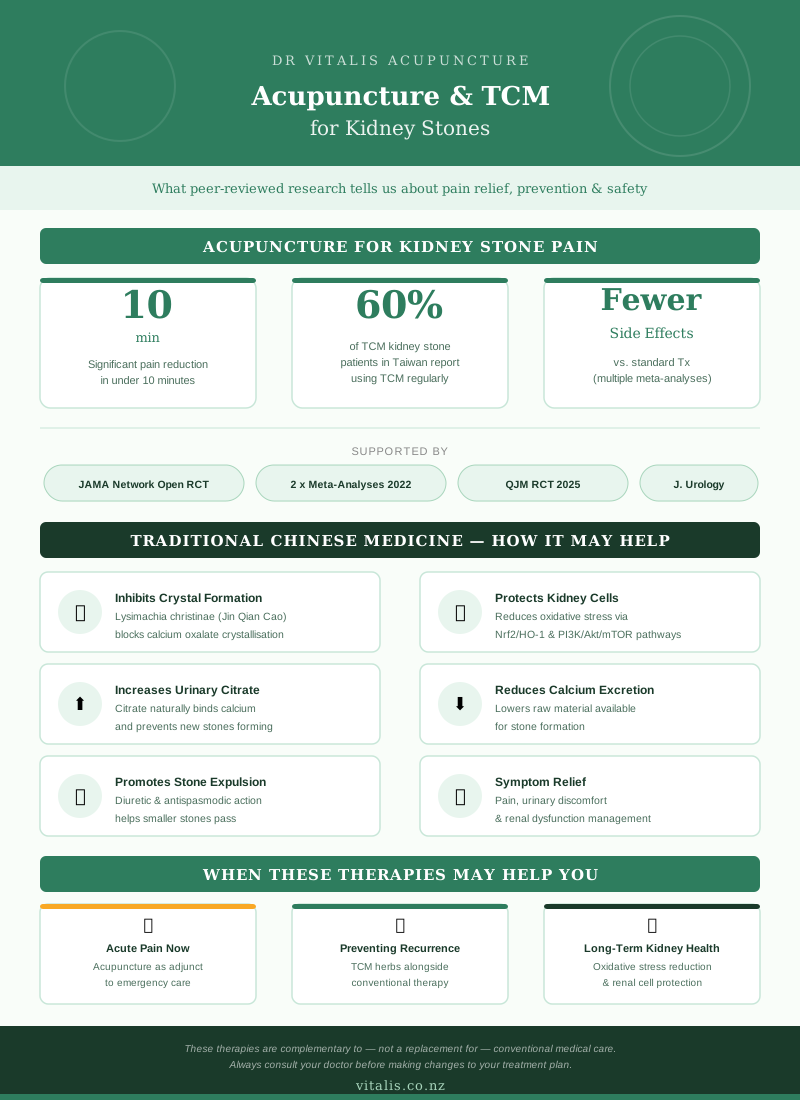
A landmark randomised clinical trial published in JAMA Network Open — one of the world’s most respected medical journals — found that acupuncture used alongside standard emergency care significantly improved pain relief in patients with acute kidney stone pain.
“Adjunctive acupuncture resulted in better pain relief and a lower rate of rescue analgesia use compared with sham acupuncture.”
— Tu JF et al., JAMA Network Open, 2022
A more recent 2025 randomised clinical trial published in QJM reinforced these findings, showing that early acupuncture intervention in the emergency department provided rapid and clinically meaningful pain reduction in patients presenting with suspected acute renal colic.
“Early acupuncture intervention provided rapid pain relief and reduced analgesic consumption in emergency department patients with acute renal colic.”
— Cao Y et al., QJM, 2025
Acupuncture Works Faster Than You Might Expect
One of the most striking findings in the research is how quickly acupuncture can act. A double-blind, sham-controlled trial found significant pain reduction within just 10 minutes of starting acupuncture treatment — a remarkably fast response that rivals conventional medications.
Fewer Side Effects Than Standard Painkillers
For patients who cannot tolerate NSAIDs — such as those with kidney disease, stomach ulcers, or cardiovascular conditions — this matters enormously. Multiple studies have confirmed that acupuncture carries a favourable safety profile with fewer adverse effects compared to standard analgesic medications.
A systematic review and meta-analysis published in Evidence-Based Complementary and Alternative Medicine concluded:
“Acupuncture is effective and safe in relieving renal colic caused by urinary calculi, with fewer adverse effects than conventional analgesics.”
— Qu Z et al., Evidence-Based Complementary and Alternative Medicine, 2022
A second meta-analysis published in Frontiers in Medicine similarly found:
“Acupuncture showed significant efficacy in pain relief for renal colic, with a favourable safety profile, supporting its use as a complementary treatment option.”
— Chen HT et al., Frontiers in Medicine, 2022
The Bottom Line on Acupuncture
| What acupuncture can help with | What acupuncture does not do |
|---|
| Help pass kidney stones | Dissolve kidney stones |
| Rapid pain reilief during renal colic, reducing need for rescue painkillers | Replace guideline-based stone management |
| Fewer side effects vs. NSAIDs | Alter the long-term natural history of stones |
| Adjunctive support in emergency settings | Substitute for medical evaluation |
Traditional Chinese Medicine (TCM) for Kidney Stones: A Closer Look
TCM has been used for centuries to treat urinary tract conditions, and modern science is beginning to understand why some of these ancient remedies may work.
A Widely Used Approach
Population-based data from Taiwan — one of the most rigorous health data systems in the world — reveals just how common TCM use is among kidney stone patients:
“More than 60% of urolithiasis patients in Taiwan use Traditional Chinese Medicine, with formulas such as Jia-Wei-Xiao-Yao-San and Ji-Sheng-Shen-Qi-Wan commonly prescribed to alleviate pain and retard renal dysfunction.”
— Lin PH et al., Journal of Alternative and Complementary Medicine, 2016
This is not simply cultural habit. Many of these patients are using TCM alongside — and because of — the real benefits they experience.
Herbal Medicines That May Help Prevent Stones From Forming
One of the most exciting areas of TCM research involves a herb called Lysimachia christinae Hance — known in Chinese as Jin Qian Cao or “Gold Coin Grass.” It has been used in Chinese medicine for urinary conditions for generations, and recent laboratory research is beginning to explain its mechanisms.
A 2025 study published in Histology and Histopathology found that an aqueous extract of Lysimachia christinae Hance:
“Ameliorated renal injury in kidney stone rats and reduced calcium oxalate crystal-induced oxidative stress in human kidney cells, via inhibition of the PI3K/Akt/mTOR pathway.”
— Zheng X et al., Histology and Histopathology, 2025
In simpler terms: this herb appears to protect kidney cells from damage, reduce inflammation, and interrupt the process by which calcium oxalate crystals form and grow — which is the most common type of kidney stone.
Natural Compounds That Block Crystal Formation
A study published in the Journal of Ethnopharmacology screened a range of medicinal herbs for their ability to inhibit the growth of calcium oxalate crystals — the mineral building blocks of most kidney stones:
“Several natural extracts from medicinal herbs demonstrated significant inhibitory effects on the pathological crystallization of calcium oxalate, suggesting their potential as natural inhibitors for kidney stone prevention.”
— Li S et al., Journal of Ethnopharmacology, 2022
Clinical Benefits: What Herbal Formulas May Do for You
A comprehensive systematic review published in Naunyn-Schmiedeberg’s Archives of Pharmacology synthesised a wide body of evidence on anti-urolithiasis approaches and found promising results for:
- Increasing urinary citrate — citrate is a natural inhibitor of stone formation
- Reducing urinary calcium excretion — lowering the raw material stones are made from
- Promoting stone expulsion — helping smaller stones pass more easily
- Generally favourable short-term safety profiles
“Several herbal extracts and polyherbal formulations have shown promise in clinical trials for increasing urinary citrate, reducing calcium excretion, and promoting stone expulsion.”
— Allam AT et al., Naunyn-Schmiedeberg’s Archives of Pharmacology, 2026
Indian and Chinese Herbal Traditions: Shared Wisdom
A review published in the Journal of Ethnopharmacology examined herbal remedies used in both India and China for urinary stones, finding significant overlap in the plants used and their proposed mechanisms:
“Herbal remedies used traditionally in India and China for urinary stones demonstrate multiple mechanisms relevant to stone prevention and treatment, including diuresis, antioxidant activity, and inhibition of crystallization.”
— Kasote DM et al., Journal of Ethnopharmacology, 2017
How Might These Therapies Work? The Science in Plain Language
You do not need to be a scientist to appreciate these mechanisms. Here is a brief plain-language explanation of the key pathways researchers have identified:
Nrf2/HO-1 Axis — Your Body’s Master Antioxidant Switch
When kidney cells are stressed by calcium oxalate crystals, they generate harmful free radicals. Certain herbal compounds appear to activate the Nrf2 pathway, which ramps up your body’s own antioxidant defences and protects kidney cells from damage.
PI3K/Akt/mTOR Pathway — Calming Inflammation
This pathway regulates cell survival, inflammation, and growth. Research on Lysimachia christinae found it works partly by inhibiting overactivation of this pathway in damaged kidney cells — essentially calming down the destructive inflammatory response triggered by stone formation.
Urinary Chemistry Effects — Changing the Environment
Some TCM formulas appear to work directly on the chemistry of your urine — increasing citrate (which binds calcium and stops crystals forming), reducing calcium in the urine, and promoting a urinary environment less hospitable to stone growth.
Is This Safe? What You Need to Know
Acupuncture, when performed by a qualified and registered practitioner, has an excellent safety record. The risk of serious adverse events is extremely low, and multiple studies confirm it is well-tolerated even in emergency settings.
TCM herbal medicines have a generally favourable short-term safety profile based on clinical studies to date. However, it is important to be aware of the following:
- Herb-drug interactions: Some herbs can interact with prescription medications
- Quality and sourcing: Always use practitioner-grade, tested herbal products — not unverified supplements
- Kidney considerations: A small number of herbal ingredients (not those discussed above) have been associated with kidney injury when used incorrectly — this is why professional guidance matters
- Long-term data: Most clinical studies are short-term; we need more long-term safety data
⚠️ We recommend that you allways tell your doctor and your TCM practitioner about all medications and supplements you are taking. Never stop or reduce prescribed medication without consulting your doctor first.
What This Means for You as a Patient
Here is a practical summary of how to think about integrating these therapies into your care:
If You Are Experiencing Acute Kidney Stone Pain Right Now
- Seek conventional medical care first — your GP, urgent care, or emergency department
- Ask about acupuncture as an adjunct, particularly if NSAIDs are not fully controlling your pain or you cannot tolerate them
- Acupuncture has strong evidence for rapid pain relief and reduced medication need
If You Have Had Kidney Stones Before and Want to Reduce Recurrence
- Work with your doctor to understand your stone type and standard prevention strategies
- Consider TCM herbal formulas as a complementary approach — evidence supports potential benefits for urinary citrate, calcium excretion, and renal protection
- Look for a practitioner who integrates both conventional knowledge and TCM expertise
If You Are Managing Ongoing Kidney Health
- TCM’s focus on reducing oxidative stress and supporting kidney cell health aligns well with a long-term kidney health strategy
- Lifestyle advice in TCM — diet, hydration, and stress management — complements conventional recommendations perfectly
A Note for Men: Could Kidney Stones Be Affecting Your Fertility?
Most men dealing with kidney stones are focused on one thing: getting through the pain and getting back to normal life. But there is another aspect of recurrent stone disease that rarely gets discussed: kidney stones may have a real impact on male fertility. For younger men in their reproductive years, this is worth knowing about.
The connection works through four main pathways. First, stones can cause physical blockages that affect the flow of semen and interfere with ejaculation. Second, the infections that frequently accompany kidney stones can cause damage and scarring in the reproductive tract, affecting how sperm are transported. Third — and perhaps most surprisingly — research suggests that chronic kidney stone disease can disrupt testosterone levels, reducing sperm production, count, and motility. Finally, the ongoing pain, stress, and anxiety that comes with recurrent stone disease can reduce libido and affect sexual function in ways that are easy to overlook but genuinely significant.
The encouraging news is that the relationship appears to work in both directions. Clinical observations have found that successfully treating kidney stones is associated with improved sperm parameters and better fertility outcomes — meaning that getting on top of your stone disease is not just about protecting your kidneys, it may also be protecting your reproductive health at the same time.
If you are a man dealing with recurrent kidney stones and you and your partner are thinking about starting or growing a family, it is worth raising this with your doctor as part of your overall assessment. It is not a reason for alarm — it is simply another compelling reason to address stone disease proactively rather than waiting for the next episode to arrive.
“Studies indicate kidney stones can decrease sperm quality and motility… Medical professionals have observed cases where the treatment of kidney stones improved fertility outcomes. Research suggests that chronic kidney stones can affect testosterone levels, further impacting fertility.”
— World IVF Centre: Do Kidney Stones Impact Male Fertility?, 2024
A Note on Evidence
We want to be transparent with you. While the research summarised here is genuinely encouraging, the honest scientific assessment is that:
- Most TCM kidney stone studies are small in scale or conducted in animal models
- Acupuncture evidence is stronger — multiple RCTs and meta-analyses — but most studies are still single-centre
- Neither TCM nor acupuncture is included as a first-line treatment in major Western guidelines
- More large-scale, high-quality clinical trials are still needed
This does not mean these therapies do not work — it means the evidence base, while promising and growing, is not yet at the same level as established conventional treatments. Our commitment to you is always to present the evidence honestly, so you can make informed decisions with your healthcare team.
How our experienced team at Dr Vitalis acupuncture can help
At Dr Vitalis Acupuncture, we are experienced in integrating acupuncture and TCM with conventional care for conditions including kidney stones and urinary health. We work collaboratively, not in competition with your medical team.
If you are dealing with kidney stones, whether for the first time or as a recurring challenge, we would love to talk with you about how an integrative approach might support your health journey.
Book a consultation with our team today →
References
- Tu JF, Cao Y, Wang LQ, et al. Effect of Adjunctive Acupuncture on Pain Relief Among Emergency Department Patients With Acute Renal Colic Due to Urolithiasis: A Randomized Clinical Trial. JAMA Network Open. 2022;5(8):e2225735. https://doi.org/10.1001/jamanetworkopen.2022.25735
- Qu Z, Wang T, Tu J, et al. Efficacy and Safety of Acupuncture in Renal Colic Caused by Urinary Calculi in Adults: A Systematic Review and Meta-Analysis. Evidence-Based Complementary and Alternative Medicine. 2022;2022:7140038. https://doi.org/10.1155/2022/7140038
- Chen HT, Kuo CF, Hsu CC, et al. Clinical Efficacy of Acupuncture for Pain Relief From Renal Colic: A Meta-Analysis and Trial Sequence Analysis. Frontiers in Medicine. 2022;9:1100014. https://doi.org/10.3389/fmed.2022.1100014
- Cao Y, Qu Z, Zhang S, et al. Early Acupuncture Intervention for Pain Relief in Emergency Department Patients With Suspected Acute Renal Colic Caused by Urinary Calculi: A Randomized Clinical Trial. QJM. 2025:hcaf011. https://doi.org/10.1093/qjmed/hcaf011
- Lee YH, Lee WC, Chen MT, et al. Acupuncture in the Treatment of Renal Colic. The Journal of Urology. 1992;147(1):16–18. https://doi.org/10.1016/s0022-5347(17)37121-5
- Zheng X, Lv S, Wang W, Zhu L, Lin L. Lysimachia Christinae Hance Aqueous Extract Ameliorates Renal Injury in Kidney Stone Rats and Calcium Oxalate Crystal-Induced Oxidative Stress in HK-2 Cells via Inhibiting the PI3K/Akt/mTOR Pathway. Histology and Histopathology. 2025:18964. https://doi.org/10.14670/HH-18-964
- Li S, Macaringue EGJ, Zhou D, et al. Discovering Inhibitor Molecules for Pathological Crystallization of CaOx Kidney Stones From Natural Extracts of Medical Herbs. Journal of Ethnopharmacology. 2022;284:114733. https://doi.org/10.1016/j.jep.2021.114733
- Lin PH, Lin SK, Hsu RJ, Cheng KC, Liu JM. The Use and the Prescription Pattern of Traditional Chinese Medicine Among Urolithiasis Patients in Taiwan: A Population-Based Study. Journal of Alternative and Complementary Medicine. 2016;22(1):88–95. https://doi.org/10.1089/acm.2015.0116
- Allam AT, El-Dessouki AM, El-Shiekh RA, et al. A Holistic Guide to Effective Prevention and Treatment for Kidney Stones: A Systematic Review Exploring Anti-Urolithiasis Approaches. Naunyn-Schmiedeberg’s Archives of Pharmacology. 2026;399(3):3235–3284. https://doi.org/10.1007/s00210-025-04658-y
- Kasote DM, Jagtap SD, Thapa D, Khyade MS, Russell WR. Herbal Remedies for Urinary Stones Used in India and China: A Review. Journal of Ethnopharmacology. 2017;203:55–68. https://doi.org/10.1016/j.jep.2017.03.038
- Yeh C-T, Tsai F-K. A Short Review Based on the Article Entitled “Acupuncture Treatment as an Adjuvant Therapy to Promote Urinary Stone Passage Rate: A Systematic Review and Meta-analysis.” Journal of Alternative, Complementary & Integrative Medicine. 2023;9:366. https://doi.org/10.24966/ACIM-7562/100366